
Technologies Enabling Sustainable Automation
Jul 16th, 2026
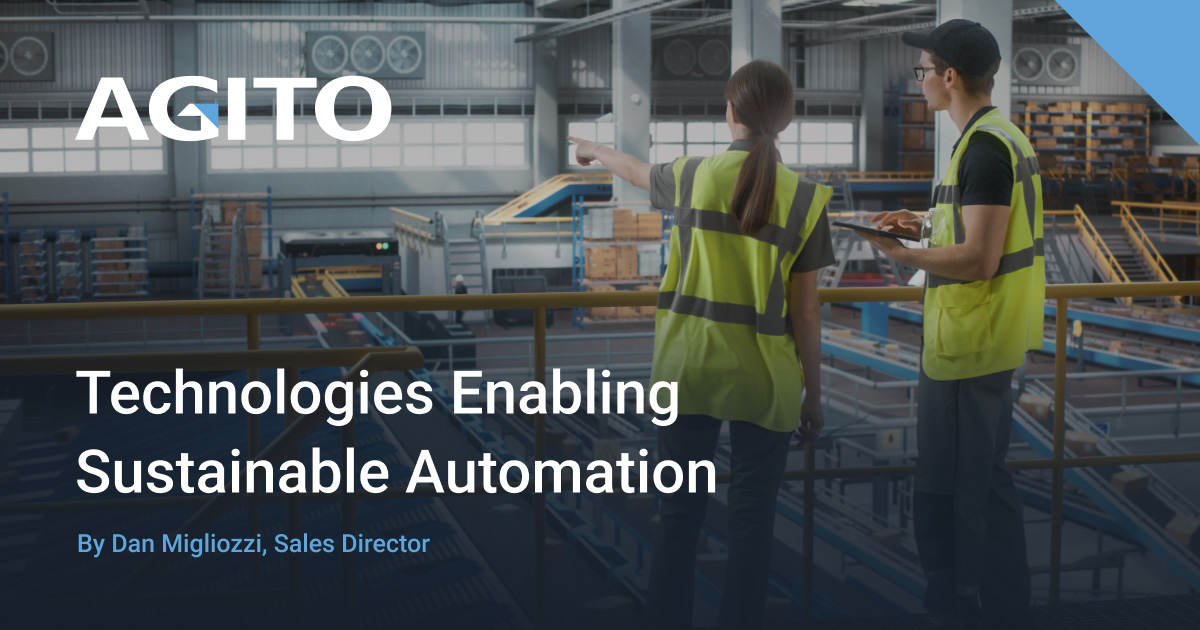
Several technologies enable sustainable automation, each contributing distinct capabilities. The greatest gains are achieved when these technologies operate as an integrated system rather than in isolation.
Robotics and Smart Manufacturing Systems
Robotics and smart manufacturing systems improve accuracy, reduce human error, and lower material waste. Energy-efficient drives, regenerative technologies, and intelligent scheduling reduce power consumption. Integrated control systems ensure different parts of the operation communicate effectively, limiting inefficiencies across production and logistics.
“Technology delivers the greatest sustainability impact when systems are designed to work together, not when individual solutions are deployed in isolation.” – Dan Migliozzi
Artificial Intelligence and Machine Learning
Artificial intelligence and machine learning play a critical role in predictive maintenance, process optimisation and demand forecasting. Predictive maintenance reduces unplanned downtime and extends equipment life. Process optimisation improves energy efficiency, while accurate demand forecasting aligns output with actual market demand. This helps reduce excess inventory and material waste. In a large packaging facility, AI-based scheduling reduced peak-hour energy consumption by 18% and lowered spoilage by 12%.
Industrial IoT and Real-Time Data
Industrial IoT provides the real-time data required for informed decision-making. Sensors monitor energy usage, machine performance and environmental conditions, generating actionable insights. Analysis of this data allows organisations to identify inefficiencies, prevent waste and continuously optimise production processes.
Renewable Energy Integration
Renewable energy integration complements automation technologies by reducing reliance on grid electricity. Solar, wind and biomass systems can supplement or replace traditional energy sources, lowering carbon emissions. Smart energy management systems coordinate renewable energy supply with production schedules. This supports operational continuity while maximising the use of low-carbon power. A UK beverage manufacturer that integrated solar energy into its automated bottling line achieved annual savings of £120,000 while reducing carbon emissions by 15%.
“Sustainable automation is ultimately about integration. Energy systems, production technologies and operational decisions must function as a single, coordinated ecosystem.” – Dan Migliozzi
Final Thoughts
The common thread across these technologies is integration. Robotics alone does not reduce energy consumption, and renewable energy alone does not eliminate waste. Meaningful results come from connecting systems, processes and people so they operate as one.
About the Author
Dan Migliozzi is Sales Director for the UK, EU and North America, with over 12 years of experience in automation across manufacturing, logistics, warehousing and ecommerce. He specialises in solution design, commercial strategy, and the delivery of high-impact automation systems for tier-one and blue-chip organisations.
At AGITO Global, Dan leads commercial strategy and client engagement, helping organisations scale and optimise warehouse and intralogistics automation. He is a member of the Institution of Engineering and Technology (MIET) and an Associate Member of the International Society of Environmental Professionals (AISEP).
His work focuses on aligning systems, people and processes to deliver efficient, resilient and sustainable operations.